Beyond the Basket: Speculative Loyalty Schemes

Beyond the Basket: Speculative Loyalty Schemes

A Sainsbury's Nectar Collaboration Project

A Sainsbury's Nectar Collaboration Project

Speculative Design 

Speculative Design 

Behavioural Research

Behavioural Research

Interaction Design

Interaction Design

Systems Thinking

Systems Thinking

✨ Context

✨ Context

During my masters at UAL, Sainsbury's Nectar team challenged with a deliberately provocative brief: design a loyalty scheme run by local plants. It prompted us to imagine a different kind of system entirely: one where the logic of loyalty is authored not by a brand, but by nature. Rather than treating this as an abstract thought experiment, we used it as a lens to interrogate some of the most fundamental questions in enterprise with loyalty design- who gets rewarded, for what behaviours, when and what kind of relationship should a brand have with its customers over time.

Timeline

2023 - 2024
7 months


1 month

2025

Team

Shivangi (author), Oluwabukola,
Uday, Priyanka

My Role

UX Research, Strategy, Interaction
Designer, Prototype Lead

Timeline

2023 - 2024
7 months


User Base

150 Million+

Users

Domain

OTT, Entertainment


Company

Viacom 18 Digital

Media

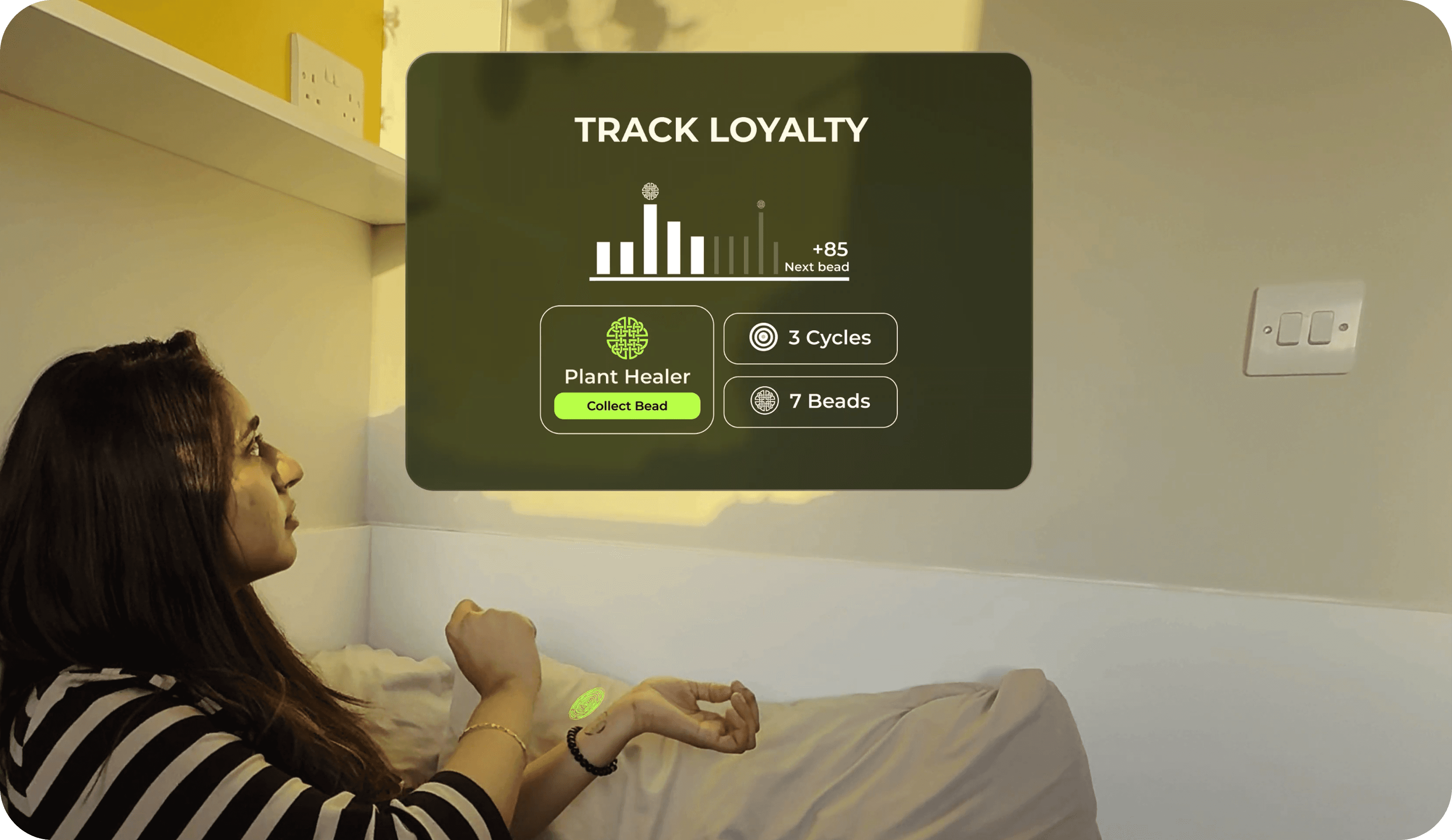
The Oaken Circle is a speculative, multi-generational loyalty system. It uses plant health as the measure of human behaviour, rewarding ecological care, community action and long-term stewardship rather than basket size. It is technical, systemic and designed to be passed down across generations.

Design Goals

Design Goals

Design Goals

1

2023 - 2024
7 months


Multi-generational loyalty

2

Reward stewardship, not just spendings

3

Speculative Plant agency

Research & Discovery

Research & Discovery

Research & Discovery

  1. Understanding the existing system

Before questioning the system, I wanted to understand it. Behavioural mapping sessions across Sainsbury's stores gave us a ground-level view of how loyalty actually operates. We visited multiple Sainsbury's stores, conducted customer interviews and ran behavioural observation sessions, mapping how people actually interact with the scheme at checkout and beyond. We were not just researching loyalty; we were researching habit and routine.

Before questioning the system, I wanted to understand it. Behavioural mapping sessions across Sainsbury's stores gave us a ground-level view of how loyalty actually operates. We visited multiple Sainsbury's stores, conducted customer interviews and ran behavioural observation sessions, mapping how people actually interact with the scheme at checkout and beyond. We were not just researching loyalty; we were researching habit and routine.

  1. Shifting the lens: what do plants value?
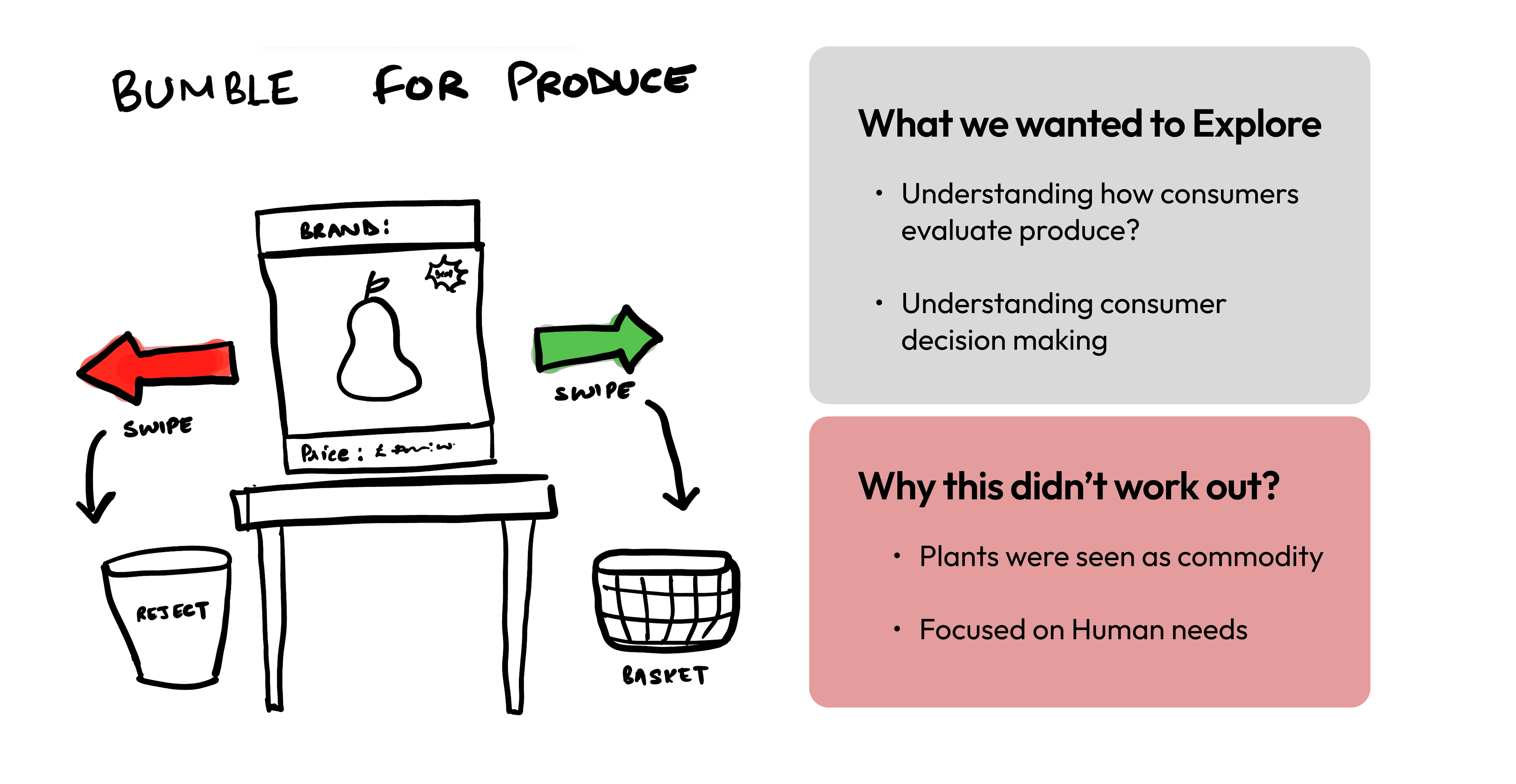
A recurring challenge in design is defaulting to human-centred framings that reinforce existing assumptions. We used a deliberate de-familiarisation exercise by asking what a plant-led system would value? to break out of that pattern. This led us to run a Love Letter / Break-up Letter exercise, prompting the team to write from the perspective of both plants and human shoppers to surface unspoken expectations on both sides

A recurring challenge in design is defaulting to human-centred framings that reinforce existing assumptions. We used a deliberate de-familiarisation exercise by asking what a plant-led system would value? to break out of that pattern. This led us to run a Love Letter / Break-up Letter exercise, prompting the team to write from the perspective of both plants and human shoppers to surface unspoken expectations on both sides

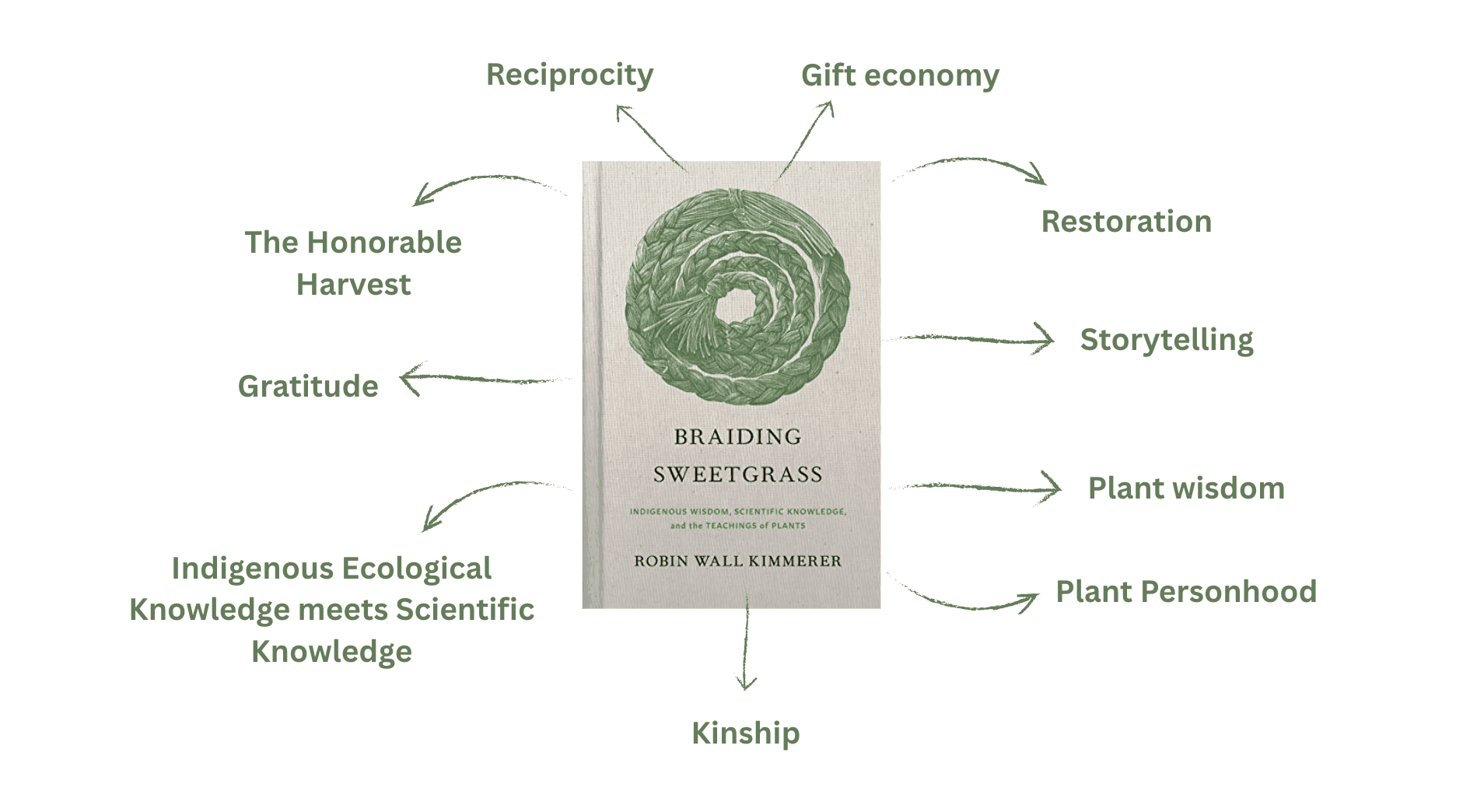
I also drew on Robin Wall Kimmerer's Braiding Sweetgrass, which introduced concepts of reciprocity, kinship and gratitude into our framework. These are not abstract philosophical ideas, they map directly onto what makes loyalty schemes feel meaningful versus transactional to real users.

I also drew on Robin Wall Kimmerer's Braiding Sweetgrass, which introduced concepts of reciprocity, kinship and gratitude into our framework. These are not abstract philosophical ideas, they map directly onto what makes loyalty schemes feel meaningful versus transactional to real users.

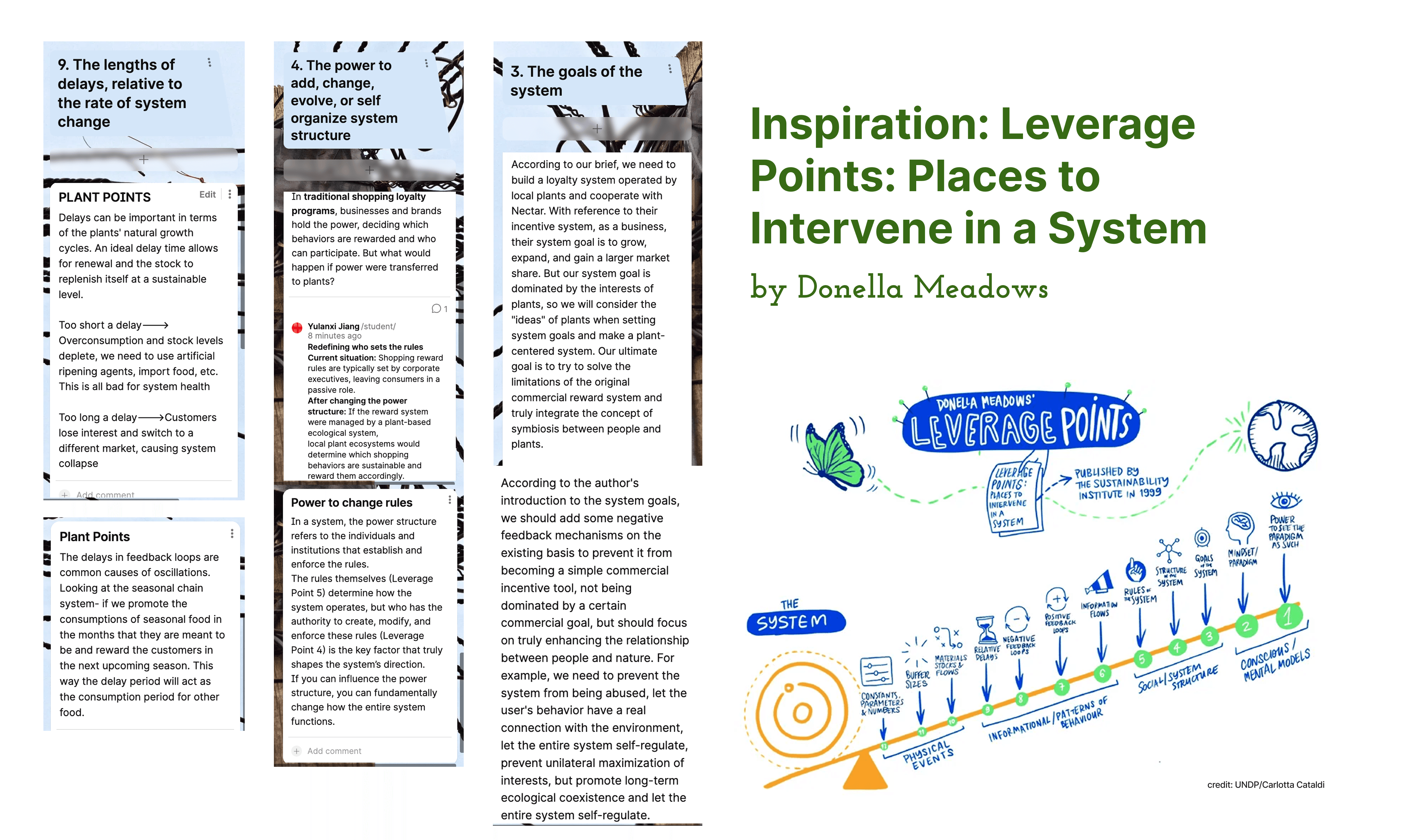
We also applied Donella Meadows' Leverage Points framework to identify where in a loyalty system intervention would create genuine behavioural change, rather than surface-level incentive shifts. This led us to focus on feedback loops and system goals, not just reward mechanics.

We also applied Donella Meadows' Leverage Points framework to identify where in a loyalty system intervention would create genuine behavioural change, rather than surface-level incentive shifts. This led us to focus on feedback loops and system goals, not just reward mechanics.

Testing communication across difference

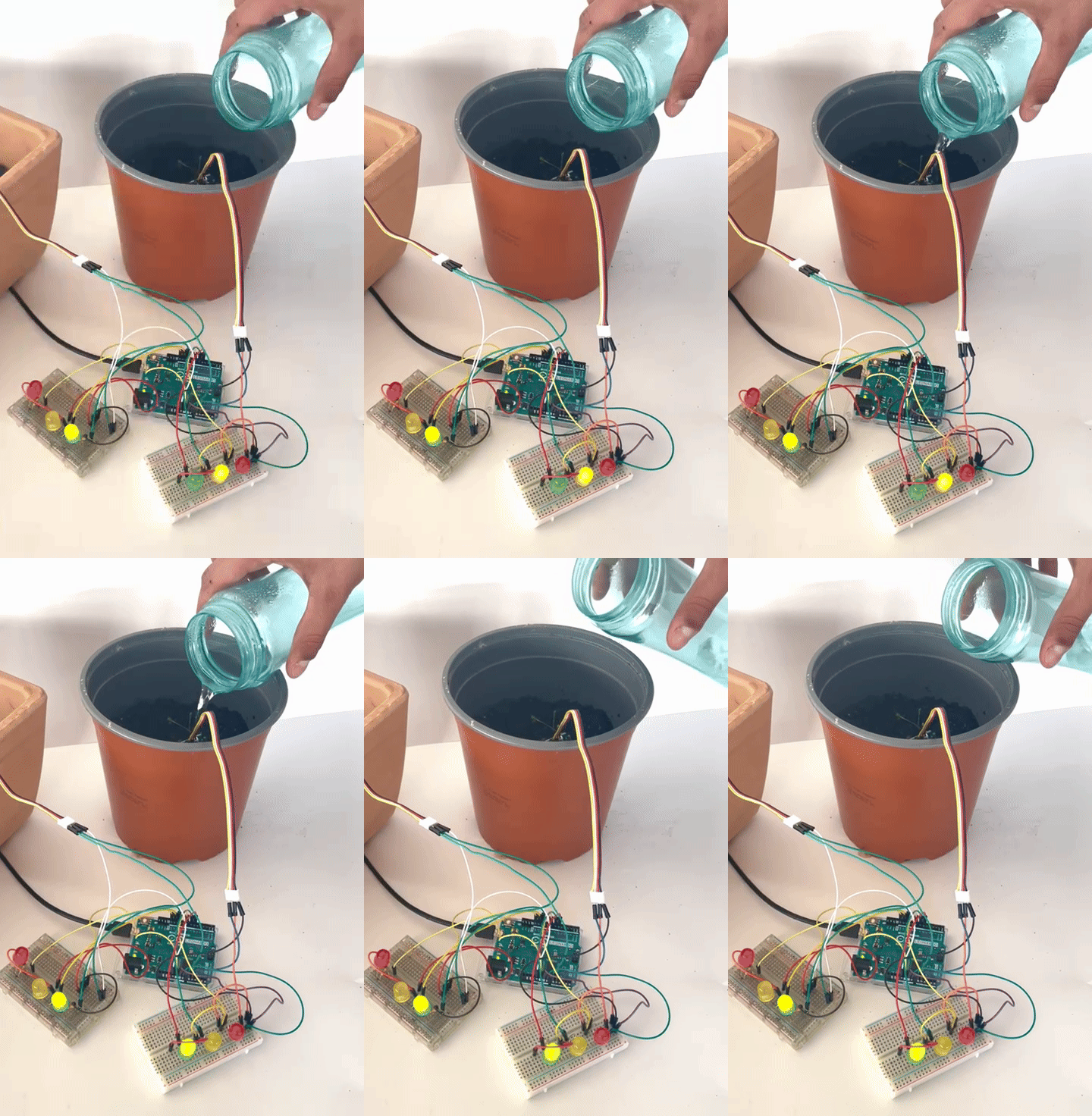
One of our key research questions was: how do you design for a relationship where one party cannot explicitly communicate their needs? We ran a small-scale experiment using moisture sensors to explore how plants signal their state, an analogy for designing systems that respond to implicit customer signals rather than only explicit ones. The MA UX cohort was given the assignment to take care of the Medo.
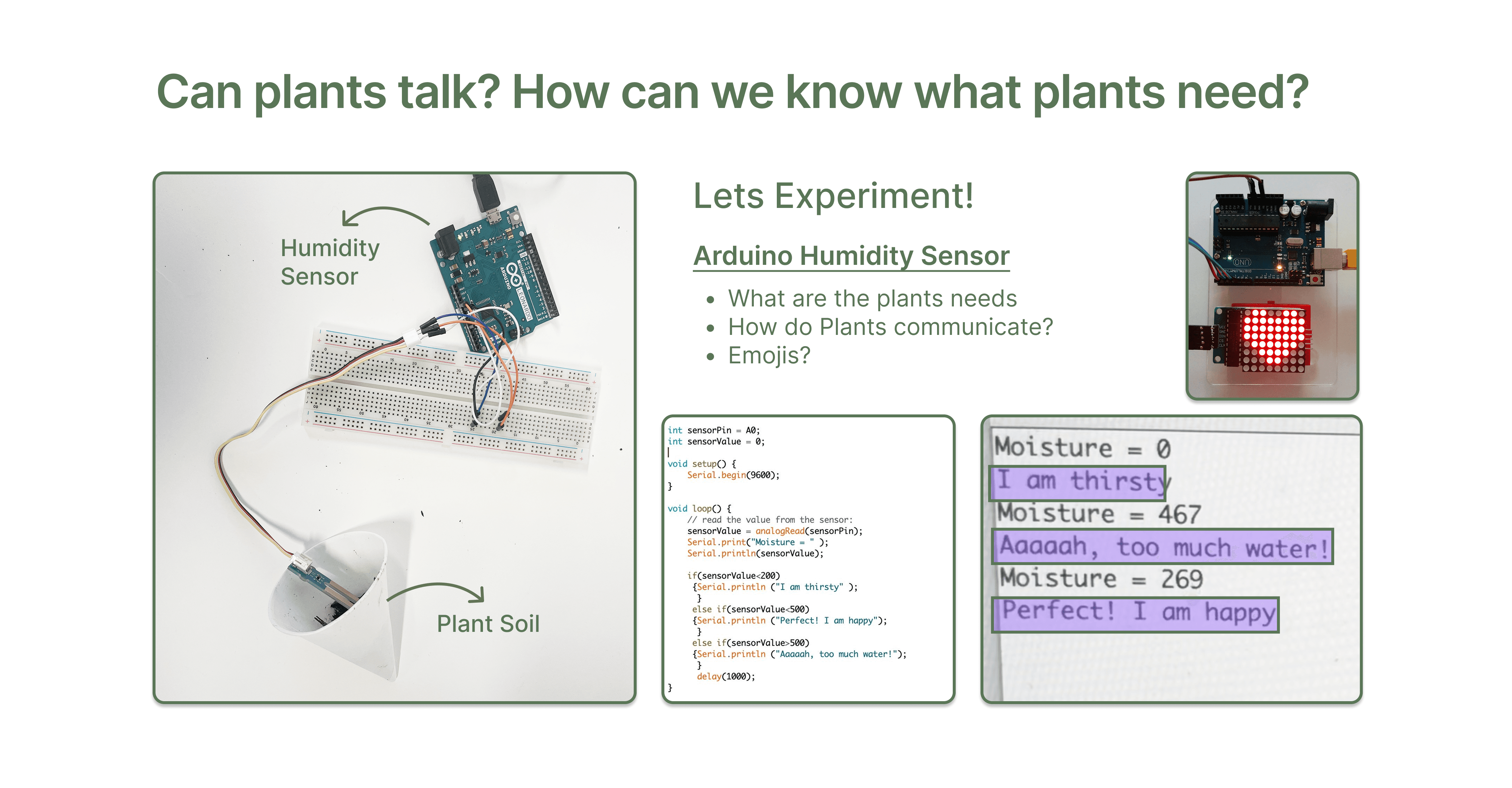
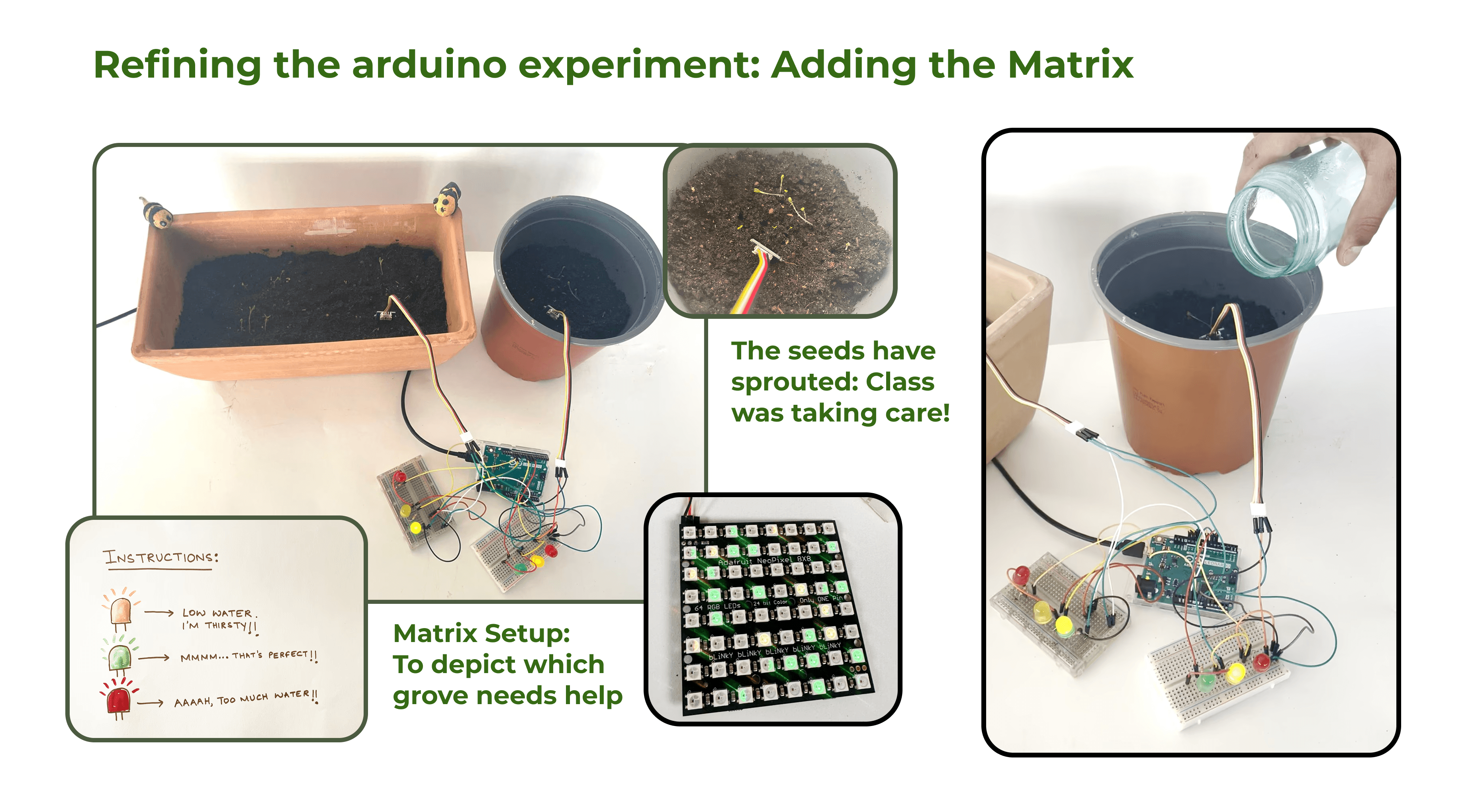
Key insights: customers who feel a loyalty scheme "notices" them. Through personalised, contextual moments rather than generic offers are significantly more likely to engage habitually. Designing for implicit signals, not just explicit actions, is where the real opportunity lies..

THE SYSTEM

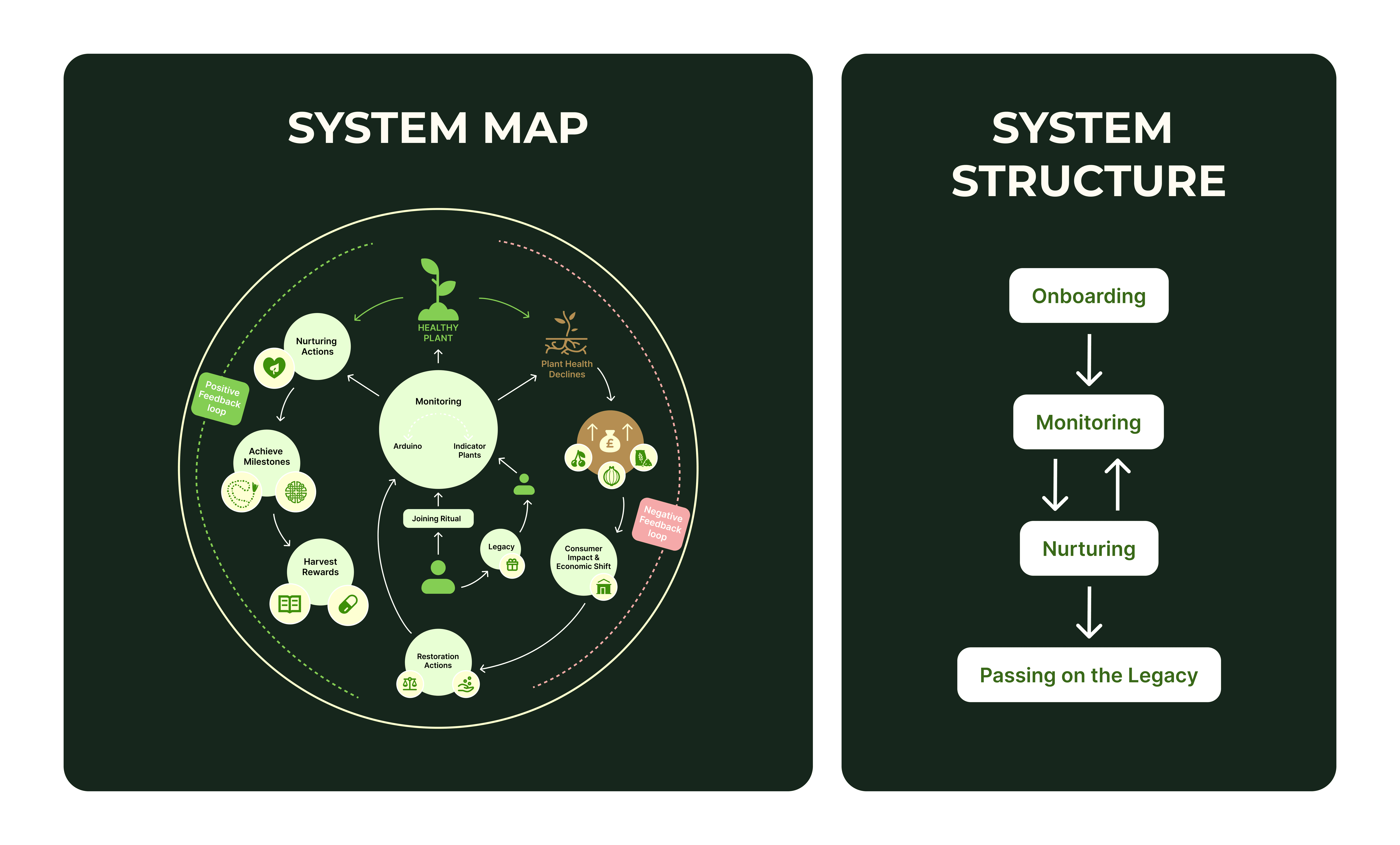
A closed-loop model: plant health drives the reward logic, human behaviour drives plant health and the system compounds over time. It is not a points scheme. It is a relationship protocol.

A closed-loop model: plant health drives the reward logic, human behaviour drives plant health and the system compounds over time. It is not a points scheme. It is a relationship protocol.

  1. Onboarding A joining ritual connects the customer to a local plant species. This is not account creation, it is an act of commitment. The ritual is designed to be physical, memorable and meaningful.

  2. Monitoring Arduino-based biosensors track plant health in real time. The system reads moisture levels, growth patterns and ecosystem indicators, translating ecological data into signals the loyalty scheme can act on. Plants effectively become the arbiters of reward.

  3. Nurturing Customers take actions that directly benefit the plant ecosystem by composting, mulching, building pollinator hotels, monitoring invasive species. These behaviours are tracked and rewarded. Shopping behaviour alone is not enough.

  4. Passing on the Legacy The system is designed to transfer. Accumulated stewardship, history and rewards can be passed to the next generation, creating a loyalty logic that operates on a timescale no conventional scheme has attempted.
What gets rewarded & what do users recieve?

The reward structure operates across five categories: material benefits (edible, medicinal, eco-products), ecosystem benefits (carbon sink, habitat creation, air quality), cultural value (connection to indigenous plant knowledge and folklore), family and community benefits (food security, economic security, health) and social benefits (recognition and status within a community of stewards).

Rewards are not transactional. They are proportional to sustained contribution over time.

What gets rewarded & what do users recieve?

The reward structure operates across five categories: material benefits (edible, medicinal, eco-products), ecosystem benefits (carbon sink, habitat creation, air quality), cultural value (connection to indigenous plant knowledge and folklore), family and community benefits (food security, economic security, health) and social benefits (recognition and status within a community of stewards).

Rewards are not transactional. They are proportional to sustained contribution over time.

INTERACTION DESIGN

Bodystorming in the field

We made storyboards based on the system design, then took those to Epping Forest and enacted the onboarding and legacy rituals of our scheme through bodystorming. This immersive method revealed gaps in our journey, moments where the experience felt confusing or disconnected, that we would not have found sitting at a desk. It reinforced my belief that experience design requires physically inhabiting the journey, not just mapping it.

Exhibition and live testing

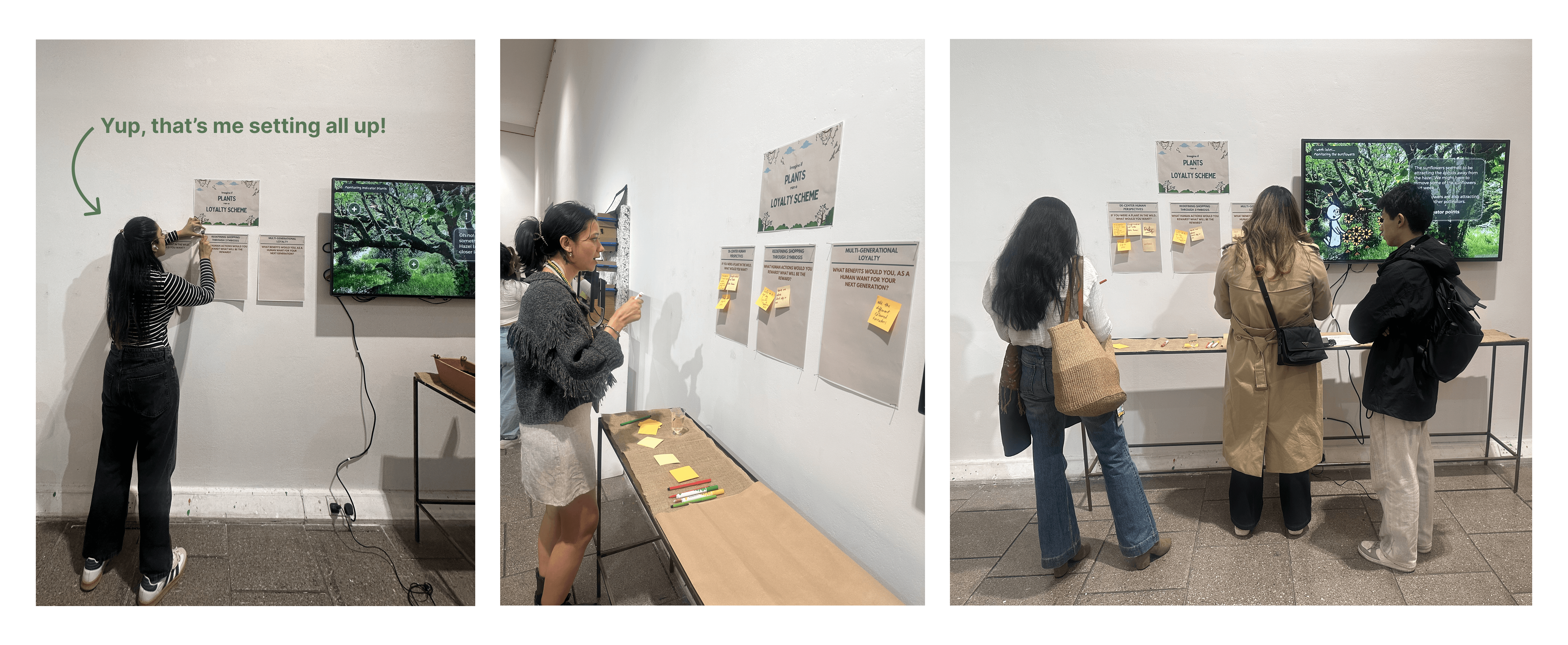
We displayed our prototype and system at the LCC Work in Progress gallery, using it as a live research opportunity. We asked three targeted questions to gallery visitors about their perceptions of loyalty, rewards and their relationship with local plants. The insights fed directly back into our design iteration, a compressed version of the continuous discovery process used in agile product teams.
ON TECHNOLOGY
A deliberate choice about tools

Early in the project we explored VR as a possible interface — a Meta Quest prototype that could immerse users in the system's world. We stepped back from it. In line with the Braiding Sweetgrass principles underpinning the project, we were committed to designing with accessible, evolving tools rather than technologies that create new barriers to entry.

The Arduino biosensor approach was chosen

OUTCOME

The Oaken Circle was presented to the Sainsbury's Nectar design team as a fully resolved speculative system with service blueprint, system map, interaction prototypes and a reward framework spanning material, ecological, cultural and intergenerational value.

The Nectar team responded positively, recognising the multi-generational reward structure and the plant-agency framing as genuinely new territory for loyalty design.

The Oaken Circle was presented to the Sainsbury's Nectar design team as a fully resolved speculative system with service blueprint, system map, interaction prototypes and a reward framework spanning material, ecological, cultural and intergenerational value.

The Nectar team responded positively, recognising the multi-generational reward structure and the plant-agency framing as genuinely new territory for loyalty design.

REFLECTION

REFLECTION

REFLECTION

  • This project was one of the most challenging design briefs I have worked on. It was fully speculative and required me to simultaneously hold rigorous UX thinking and radical creative provocation. Working directly with the Sainsbury's Nectar team gave it real stakes.

  • The most useful thing this project demonstrated is that loyalty design is fundamentally a systems problem — not a marketing one.

  • The mechanics of a scheme matter far less than the feedback loops it creates, the behaviours it normalises over time, and the relationship it builds between a brand and its customers across years, not quarters. Designing at Sainsbury's scale means those feedback loops operate on 1.2 billion annual interactions. Getting the underlying logic right is the work.